--
--
GACER
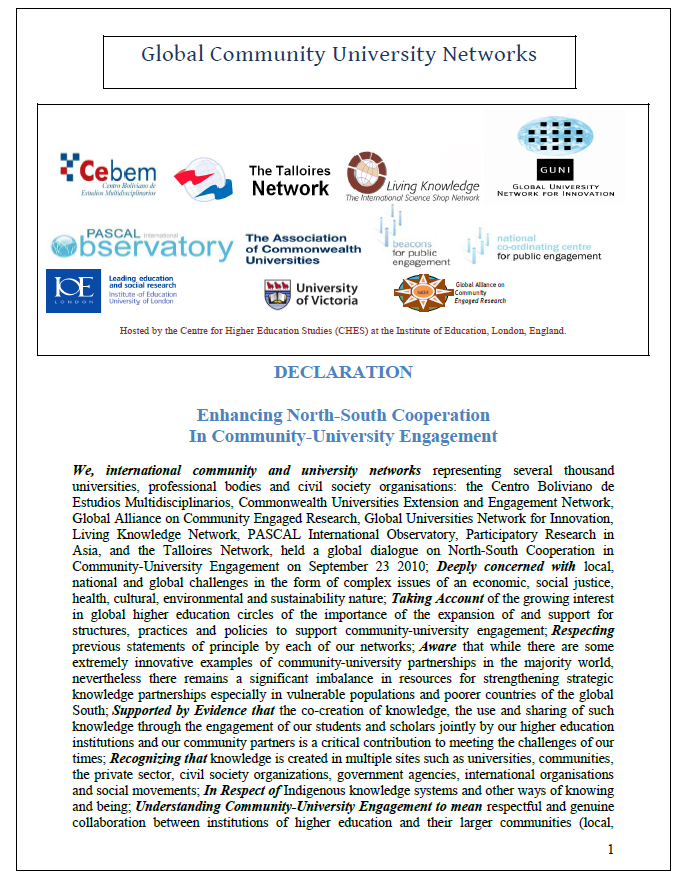
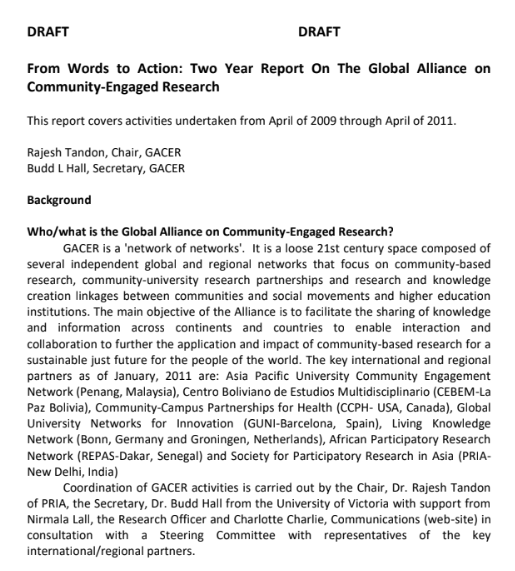
The Global Alliance on Community-Engaged Research (GACER) is an organization created by representatives of universities, networks, and civil society organizations.
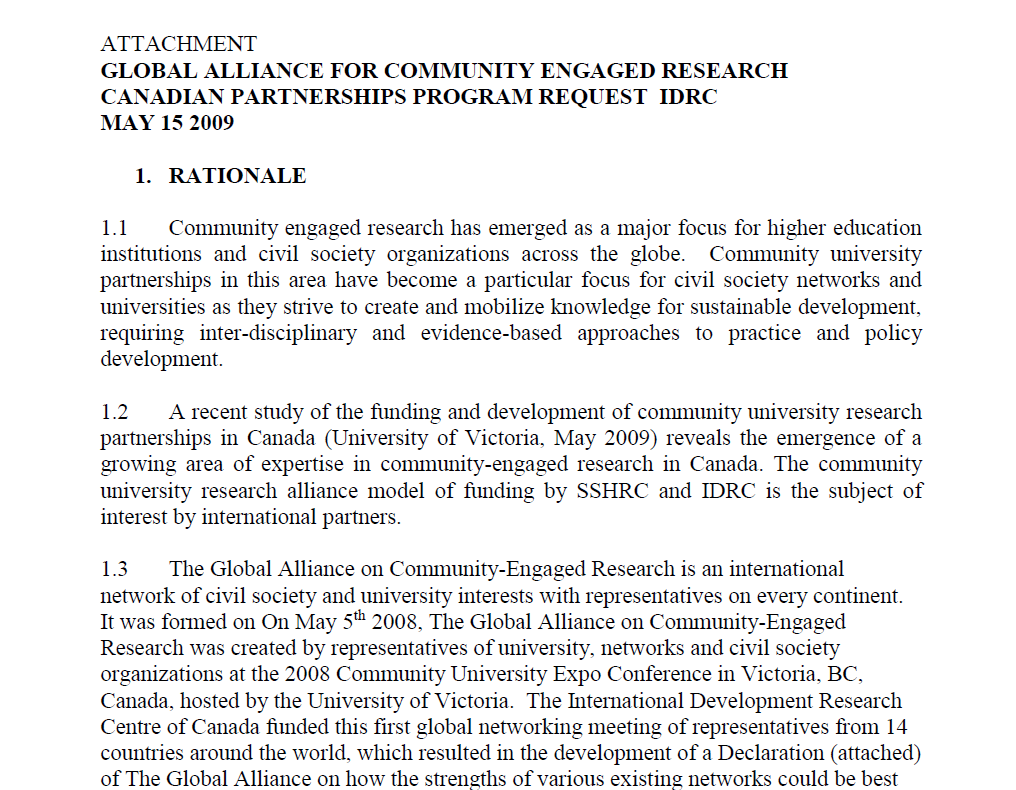
The alliance was established in May 2008 at the Community University Expo Conference, hosted by the University of Victoria. Representatives from 14 countries worldwide developed and founded a declaration for GACER, which was endorsed by many of the 600 delegates present at the conference. This Alliance is a collaborative space for already existing global and regional networks. Its committee includes Rajesh Tandon of PRIA-India, and representatives from organizations in the UK, Bolivia, USA, Canada, and others.
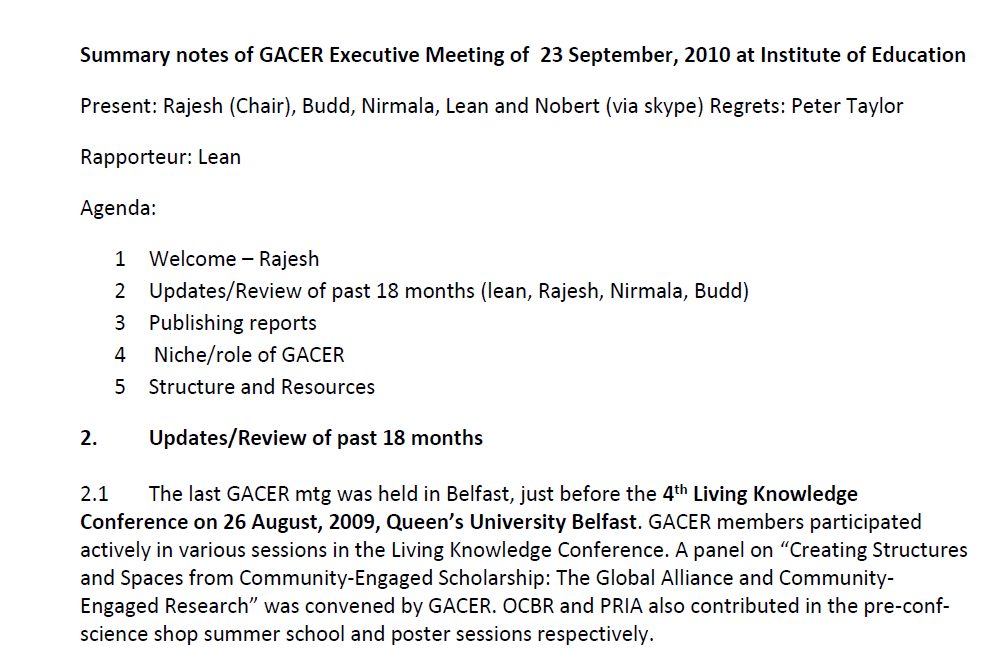
GACER's overall objective is to facilitate the sharing of experiences in various global community-university research networks. Its activities encompass pivotal advocacy work at several global conferences and summits such as the UNESCO World Conference on Higher Education in 2009.
GACER’s further objectives include influencing policy and enhancing funding for climate initiatives within global circles. It also aims to mobilize and create knowledge that contributes to human betterment. This is achieved by sharing practices, supporting communities in creating healthier environments, developing new generations of community-engaged scholars, measuring the impact of their work, and advocating for enhanced policy and resource support. GACER also seeks to examine how the strengths of existing networks can advance the purpose of using knowledge and community–university partnership strategies for social and environmental change and justice, especially among the most vulnerable.
GACER importantly recognises the vital support and role of community partners in the co-creation of knowledge, and the ability of scholars, researchers, students, practitioners, communities, and their networks to participate in public engagement activities through appropriate training and support. This marks a significant and groundbreaking step in reimagining how global alliances can democratise knowledge production and place communities at the heart of transformative social change.